
By Dhimas Anugrah
Friend, have you ever wondered what your name means?
I have. I once asked my parents why they chose to name me “Dhimas Anugrah.” They gladly shared their story.
The name Dhimas comes from Javanese. It’s a respectful term for a beloved younger brother—not the name of a king or a hero, but one that feels warm, close, and simple.
Then comes the second part of my name: Anugrah. That’s where the more personal story begins.
My father, who passed away in 2015, had long hoped for a son. His first child was a daughter—my older sister, Dhian. Though she wasn’t the son he had prayed for, he loved her deeply. When I was born, he named me Anugrah, meaning “gift.” It was as if my arrival was the answer to a prayer he had carried quietly for years.
So, my name came together with its full meaning: Dhimas Anugrah—a beloved younger brother and a long-awaited gift.
Since childhood, that name has shaped how I see myself. Perhaps it has also shaped how others see me.
But the question doesn’t end with the meaning of my name. It grows larger: do names truly hold meaning?
In Romeo and Juliet, Juliet once said, “What’s in a name? That which we call a rose by any other name would smell as sweet” (Shakespeare 2011, II.ii). The line sounds beautiful and persuasive—a rose would still smell as sweet even if called by another name.
The belief that a name can shape one’s path still lives today. It’s not only tied to people but also to institutions, places, and even objects. When tragedy recently struck East Bekasi Station, the train Argo Bromo Anggrek was renamed KA Anggrek, dropping “Argo Bromo.” The old name had carried the grandeur of mountains and the beauty of flowers—symbols of East Java’s spirit. Changing it felt like shifting part of its soul. Behind every new name lies a quiet wish to leave the past behind and begin anew.
If we return to Juliet’s words, we might see that she was right only in part. For her, a name was a label—a social wall that kept love apart. But this reflection invites us to look deeper. A name is more than a label; it is a prayer entrusted to us, a hope spoken over us, a direction we inherit.
People don’t merely carry names—they grow into them. We are shaped by how others call us and by the prayers woven into those calls. Within a name, memories, identity, and strength often dwell for a lifetime. So, what’s in a name? Perhaps far more than Juliet ever imagined.
Names in Human Culture
This practice of changing names isn’t unique to Indonesia. If we look further back, many cultures have done the same—including ancient Israel.
In Hebrew tradition, names often arise from events. This practice is called etiology: names are tied to the circumstances that gave birth to them, often sharing a common root. Beersheba was named because there people “swore an oath.” Bethel means “house of God.” Beriah came from the sorrow of Ephraim’s family. Names, in these stories, are memories that endure for a lifetime.
The story of Jabez illustrates this beautifully (1 Chronicles 4:9). His mother named him Jabez (יַעְבֵּץ) because she gave birth in pain (בְּעֹצֶב). Her labor was difficult, and the baby was born in distress. The name became a lasting mark of that suffering.
Yet there’s something curious about the word itself. Yonky Karman, an Old Testament scholar, notes that the letters in Jabez’s name are swapped—a linguistic phenomenon called metathesis. In ancient Eastern cultures, names were believed to shape destiny. By altering the letters, the mother seemed to shield her son from the misfortune his name foretold (Karman 2003, 143). Behind that small change was a mother’s love and hope: that her child’s life would be better than his beginning.
As an adult, Jabez prayed for his life to be transformed—to be spared from pain and hardship. His prayer echoed the hope his mother had whispered through his name.
This pattern repeats across cultures and centuries. The conclusion remains the same: a name doesn’t just tell who we are today—it tells who we are becoming. And if human beings can pour such meaning into a name, the question deepens: what happens when the Creator Himself gives a name?
The Most Important Name
There is one name no one ever chose for themselves, yet it became the most sacred and weighty name in human history. In Hebrew tradition, it is not spoken lightly—four letters: יהוה, the Tetragrammaton. It remains unpronounced not because it lacks meaning, but because it holds too much. Rabbis replaced it with Adonai, “Lord,” when reading Scripture aloud. They understood something we often forget: some names are greater than our lips can bear. In that truth lies the deepest paradox of this reflection. If names reveal identity, then the Creator Himself chose to dwell within a name no human tongue can fully grasp. He who names all things chose not to be named lightly.
And yet, God gives names. Each time He does, it marks transformation. Abram became Abraham—the father of many nations (Genesis 17:5). Jacob became Israel—the one who wrestled with God (Genesis 32:28). Simon became Peter—the rock (John 1:42). None of them asked for the change; it came from the One who saw not who they were, but who they were meant to become. God’s naming is always eschatological—always looking forward. Not because the present is insignificant, but because He sees farther than we can imagine.
That’s what makes Revelation 2:17 so profound: “To the one who is victorious, I will give . . . a white stone with a new name written on it, known only to the one who receives it.” The deepest name, it seems, is one known only in the most intimate relationship—spoken by God to the soul He knows completely.
My late father didn’t know Hebrew theology when he wrote Anugrah on a hospital form. He was simply a father who had waited long for a son and found that “Anugrah” was the truest word for that moment. Without realizing it, he was continuing an ancient tradition—like Jabez’s mother shifting letters in pain. He was praying through a name, entrusting his hope to a word that his son would one day grow into.
Jesus once said that He knows and “calls his own sheep by name” (John 10:3). That wasn’t just a gentle metaphor; it was a declaration of divine intimacy. Each soul is known not as a number or a statistic, but as a person with a name remembered. And if our names are written not on lists of achievements but in heaven (Luke 10:20), then they are more than legacies—they are proof that we are known, loved, and never forgotten.
So, what’s in a name?
Names are more than social labels—they are personal identities. We live with names that carry the prayers of our parents, the hopes spoken before we could speak, and the love that lingers each time someone calls us by name.
Names are threads that tie us to something greater than ourselves. Sometimes, those threads feel most real in the simplest moments—a call on an ordinary morning from someone who speaks our name with sincerity.
Ultimately, the most important name may not be the one printed on a birth certificate or carved on a tombstone, but the one known, remembered, and continually spoken by the One who knew us before our name was ever uttered.
Read Also:
Discovery Series: “We Are His, Belonging to the Family of God”
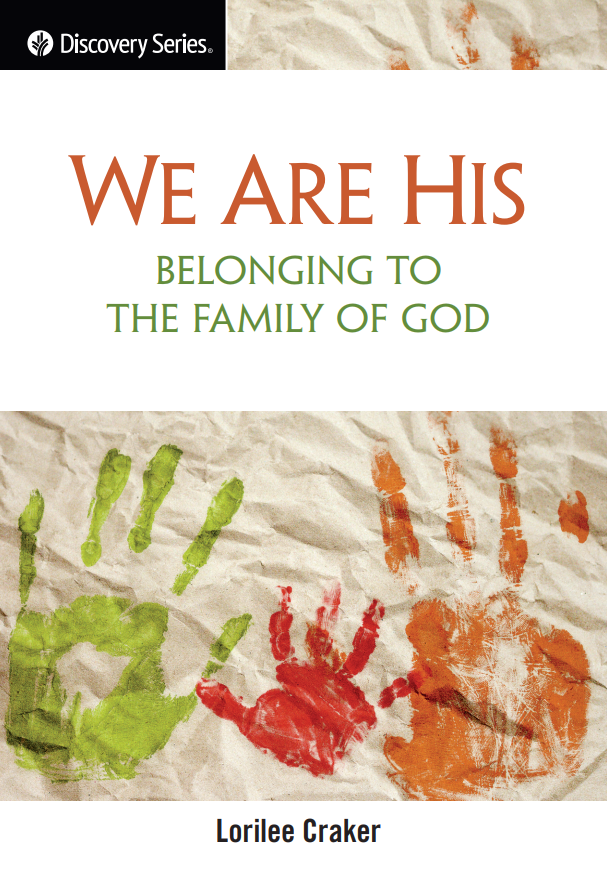 We all begin life as spiritual orphans. When we join God’s family, we bring all our heartaches, disappointments, and shattered dreams with us. Though we are not immediately healed, we are loved by Him right away.
Lorilee Craker writes to those of you who have experienced heartbreaking rejection and neglect in this life. She has experienced the highs and lows of adoption and recognizes its remarkable parallels with God’s love for us and our adoption into His family.
Our Daily Bread Ministries in Indonesia is supported by the freewill offering of individuals in Indonesia, who through their gifts enable us to continue to bring the life-changing wisdom of the Bible to many here. We are not funded by any church or organization.
